
Material reference
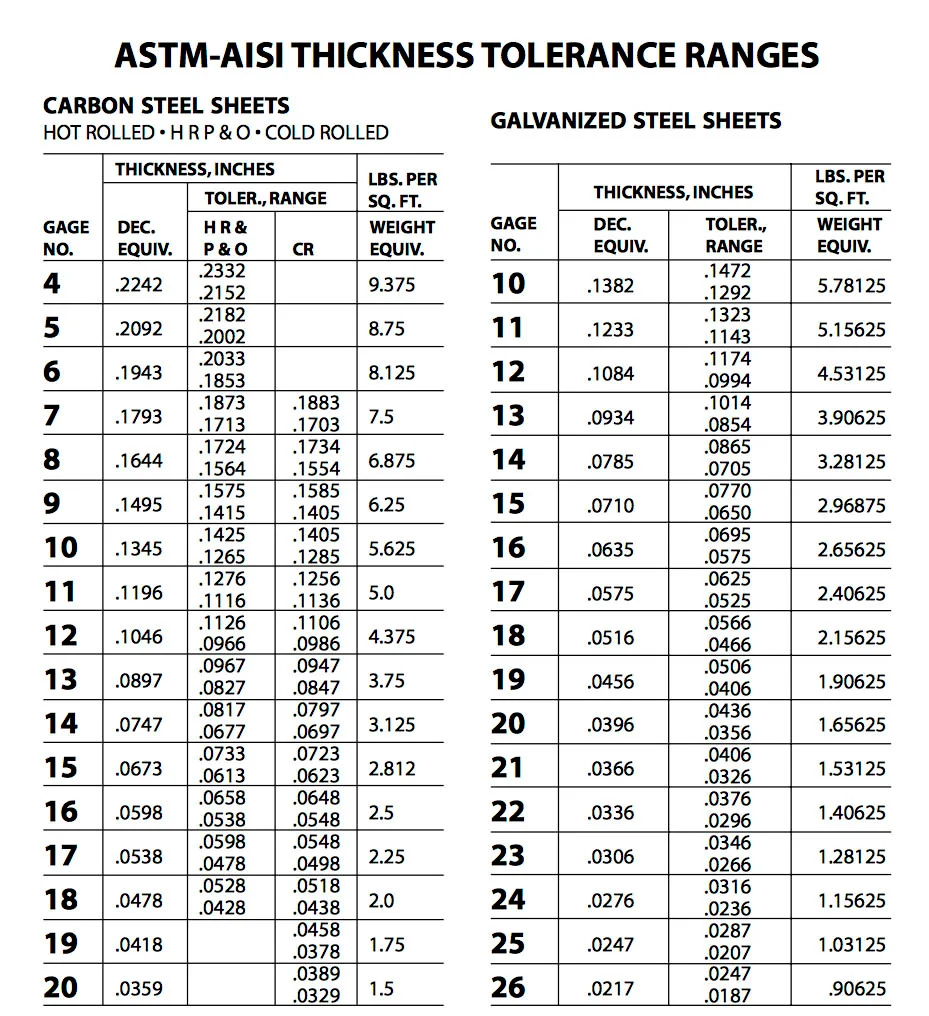
Steel Gauge Chart
Use the MD Metals thickness reference when preparing your material specification.
Preparing interactive controls…
Gauge and thickness
Gauge numbers describe sheet thickness; a higher number indicates thinner material. Always include a decimal thickness and the governing material standard in your inquiry.
The original site lists processing through .500 inches. Availability depends on the material and finished dimensions.
How to use this tool
Select a material and gauge, drag the gauge slider, or enter a decimal thickness to find the nearest nominal gauge. Compare nominal thicknesses across materials and review the selected row's published chart range and reference weight.
Formula and worked example
Millimeters = inches × 25.4. Gauge numbers are table lookups, not a universal conversion formula.
16 gauge carbon steel is listed at 0.0598 in (1.51892 mm), while 16 gauge galvanized steel is listed at 0.0635 in (1.6129 mm). The same gauge number does not always mean the same thickness.
Assumptions and interpreting the result
Values are transcribed from the existing MD Metals reference chart. A nearest-gauge match is not a tolerance or availability decision. Chart ranges are reproduced for reference and are not a claim about the latest ASTM requirements. Use the actual decimal thickness and governing specification when ordering. Materials and gauges missing from the chart are not inferred.
Common questions
Does a thickness inside a chart range prove compliance?
No. The governing material standard, width, processing condition and purchase requirements determine compliance. This tool only compares against the displayed reference chart.
Where are stainless and aluminum gauges?
The existing MD Metals chart covers carbon and galvanized steel. Those other materials need their own verified reference tables and are not substituted here.
Turn the estimate into a processing inquiry.
Share your actual material specification, dimensions and quantities with our Chicagoland, Illinois team.